How to manage a cognitive Bias that drifts from awful to awesome.
There is a scene in the Odyssey frequently referenced in behavioral sciences. Where the eponymous protagonist along with his shipmates sailed past the isle of sirens. Their voices are devilishly enchanting. Mortals that come within earshot are inexorably driven by sonorous beguilement to their doom. To combat this fate and live to journey another day, Odysseus orders that he be tied to the mast and his shipmates’ ears be filled with wax (Homer and Wilson 2018). Take away? Feeling fiendishly tempted? Bind yourself to a mast and cover your ears.
This is the portrait that hangs over Robert Hanson’s Overcoming bias blog. Framing his entries therein and offering the proverbial background for his exploration of the elephant inside the human brain. Hanson along with other behaviorists are focused on the idea of cognitive bias, seeking to bring to light the odd ticks of humanity. By what do they mean by oddness? Isn’t reason the rightful slave to our bespoken passions? Passions we ought to be free to pursue. Isn’t the point of Western Civilization, and its unique emphasis on individualism (Henrich 2020), that we are free to pursue our own happiness provided we don’t interfere with that very pursuit of our fellows? Who are social scientists to sell us books admonishing the very human behavior our founders spent so much in trying to get us to celebrate…who are you to nudge me or lecture me about my irrationality or tell me how fast I think or ought to think or tell me what happens when I blink?
How relevant is that scene from that ancient epic, how many times is humanity to follow in the footsteps of our ancestors and find ourselves tempted away from our journey by the enchanting isle of the sirens? It turns out many times. Fortunately there are other ways we can fend off temptation than being tied to a mast or filling our ears with candle wax. Ultimately to understand our bias is to understand humanity. In order to do this we must understand values. We must sit on the raft between our rational understanding of causality and our objects of desires, our preferences. Our values, whether base, moral or conventional are fundamentally a generalized abstraction of behavior or objects that approximate a preferred outcome or object. They are how we coarse grain a messy reality and endure, for a time, despite the immutable pull towards chaos.
The Business of Bias Fixing
Behaviorists grant humans the free individualistic selection of their own valued objectives and calculate precisely how shitty they are in abiding those values or obtaining their ends. Cognitive Biases are where we fail to properly engage with the Socratic method to pursue them. As bipedal primates we sometimes stumble upon logical fallacies, our syllogisms do not always connect a given proposition set to a conclusive action. In Economics this is manifest as inconsistencies in preference. At one moment we say we prefer a comfortable retirement and in the next we behave as profligates.
This topic is super trendy. As it should be. It’s super interesting. As Nassim Taleb notes:
Ferreting out antilogics is an exhilarating activity. For a few months, you experience the titillating sensation that you’ve just entered a new world.
(Taleb 2010, 103)
Exhilarating and necessary. If indeed we do plan on using statistical algorithms as the electricity that powers our society, perhaps taking good stock of our cognitive ticks will allow us better than suggesting YouTube clips that polarize us and send us doom scrolling through twitter before every election cycle (Russell 2020). More foundationally, a better understanding of ourselves will help us achieve our goals, our values. Placing the responsibility in our more level headed personas. Or at least give reason a fighting chance against the belly of our unpredictable passions. Seen this way the study of cognitive bias is not trendy, at least not a unique trend and instead part of a longer tradition of self-reflection. Beginning when we sought to know ourselves.
Bias shows up with analytical clarity thanks to Neoclassical Economic orthodoxy. Formalized and personified in a convenient caricature. One that represents a particular strand of thought, a strand of thought that likely influenced the origins and ultimately the success of Western civilization and its notoriously weird people. Sam Bowles traces the philosophical origins through the enlightenment, from Mandeville’s Fable of Bees, to Machiavelli’s Prince, and ultimately through Adam Smith and John Stuart Mill (Bowles 2016, 12–35). However it can also be viewed as a rigorous framework applied to a cultural individualistic identity construct. (A construction process detailed in The Origins of WEIRD society (Henrich 2020)).
Neoclassical Economists stated that our society can best be analyzed, understood, and predicted by placing a focus on individual rationality. So long as certain legal conditions were established and enforced in society individual actors will pursue their own interest. This began as a descriptive, analytical, dispassionate tool kit. Economists were the dryest academics, putting the science in social science. Sitting comfortably in the generally uncomfortable position between the humanities and ‘hard’ sciences. Many however, could not help adopting overt normative claims. Telling a story of what type of society we ought to live in and what we ought not to live in. Hence, what began as a dispassionate framework became a sacred temple. Individual rationality and self-interest became a totem and collective, communal motivations an anathema.
However this sacred temple is under constant barrage. People from all disciplines, like Nassim Taleb, engage in the intellectual exhilaration of hurling fusillades at the doors of their analytical shrines. Behaviorists and cognitive bias seekers have identified numerous ways in which their faith in enduring individual rationality falls to pieces. Yet they, for the most part, keep the palace intact by themselves worshiping at the altar of rationality. Offering sacrifices in the form of a yearning to bring humanity’s broken irrationality closer to the portrait of humanity it painted. Turning what was intended as a caricature into an idol. This duality of vilification and deification misses what is fundamental to humanity’s true constitution.
Value Construction
Ultimately our biases are simply behavior that does not accord with a particular objective. whether this objective was revealed earlier by our preferences. Say we chose an apple over a pear, and later on chose a pear over an orange. And then on the third day we chose an orange over the apple. we might chalk that up to a bias. We might even seek to understand the contextual environment that drove this inconsistent behavior, or our failure, our intransitivity, a sin by neoclassical modelling standards.
What if, however, one of the contexts clues uncovered that accounted for the inconsistency was consumption of a documentary that morning on netflix. One that detailed the damage to the environment apple production causes. It turns out it uses an excessive amount of water in drought ridden california, and when water supply runs low they irrigate the apple crops with the tears of baby seals. The documentary that spends a great deal of time on what needs to be done to encourage the tears to flow.
This exogenous shift in preferences is perhaps at the fringes of consumer behavior, although it is still firmly there, given consumers have always needed to identify, and in turn share values, with the producers of the products and services they acquire. It is more directly present on the supply side. The production of goods and services relies on the value set that guides the behavior of a pretty important economic production factor, humans. Together, this all comes together in understanding the puzzling aggregate of irrational and often inefficient firms.
The Venn Diagram of our shortcomings includes much overlap with the organic ecosystem of which we are very much apart. The shape of our eyes, the primate sociality we exhibit, are all dispositions we share to the natural environment. Yet it also covers much new ground. Our goodness is indeed a bit of a paradox. Our racism, misogyny (Quillian et al. 2017; Pager 2016; Doepke, Tertilt, and Voena 2011) and general outgrouping based on the minimum of differences is unique and the height of our irrationality. Even seemingly benign idiosyncrasies are greatly concerning. We are the only species that cannot communicate with conspecific strangers. We manage to trust strangers yet we have devised ways of sharing intimate thoughts and feelings with one another through language. Yet often, we deliberately manipulate our language to partition in-groups away from strangers. Even the way we express emotions, a fundamental force in our cultural cohesion, varies across cultures in a way that conceivably stifles communication and cooperation across populations.
In order to wade into the cauldron of value creation, we cannot simply argue from a given proposition and follow it as a poper logician to its anointed conclusion. This is Hume’s is-ought problem brought to the social sciences. This is Kant’s objection to pure reason. And yes, The Nietzschean criticism of the Grecian Apollinian aesthetic and intellectual tradition. Evolution not only carved an irrational primate that stumbled upon rationality, it also carved an irrational primate that stumbled upon morality.
If we cannot construct value from dispassionate descriptive analysis, if we cannot prescribe behavior based on mastery of the material sciences and our increasing understanding of causality, then we can at least better understand how we go about constructing them. We need to take the proverbial and analytical step back and deconstruct the process by which individuals construct their instrumental and intrinsic preferences. Their values.
This begins with identity. The constraints that present us with an ironic yet exclusive route to liberty. We may identify with our family and kin, or with our own the values we observe follow from the identity we inhabit . Even our personal objectives of satisfaction and happiness are a bespoken cultural construct (Henrich 2020, 33). The people around us with whom we consciously or unconsciously identify with. The particular abstracted roles we occupy within these social realms. It relates to how we connected the various strands of life into a cohesive unit. Or a story. The stories we tell ourselves are largely a function of our social environs. They are the germline of civilization. Stories are both molded by and actively mold our cultural progression. Fortifying and forgoing the contours of our imagined identities and their attendant behavioral value sets. Our Narrative Fallacy has its upsides.
Narrative Information Processors
Narratives have their downsides as well. The largest absurdity of the admissions process for higher schooling is laying out and navigating the narrative labyrinth that is the personal essay. The largest inefficiency in the private sector must be (maybe?) the time spent constructing, rehearing, and conspicuously reciting our stupid career stories for hiring managers. We must especially take care with our ostensible efficacy. Seems too proficient and we’ll be let go as ‘trying too hard’ or too artful. Try too little and it seems you have no story to tell. It’s unlikely that our mastery of boiler plate literary devices correlates positively, if at all, to our productive capability. Collectively the character we are forced to narrate is very unlike the one who will have material impact on the world and those in it.
Yet things could be worse. We could be literal Homo Economicus. A caricature that doesn’t seem all that interesting. Whatever efficacy gains the idyllic HE offers would be forgiven not so much in his implied desire to die alone, but the functional infeasibility of his being born and reared out of his own private self interest. The truth is we not only spend an inefficient time virtue signaling. We spend time fretting over actual virtue. The values we observe are what fundamentally makes us human. Without our narrative arc we would never have developed the cognitive capacity or recognize we had a bias in the first place.
According to Talab this is not simply a biological problem, one that corresponds to our unique evolutionary history. Simply that narrative is how we approached a fundamentally structural problem of information. Information needs to be reduced.
The problem of narrativity, although extensively studied in one of its versions by psychologists, is not so “psychological”: something about the way disciplines are designed masks the point that it is more generally a problem of information. While narrativity comes from an ingrained biological need to reduce dimensionality, robots would be prone to the same process of reduction. Information wants to be reduced.
(Taleb 2010, 104)
When it comes to life, information is the whole game. Every organism exploits the correlative property of information to produce, well, more information. Biological agents construct themselves by processing the instructions in genetic code. Thereby expanding structure in the face of an entropic drift towards a chaotic stable equilibrium. Finding and repeating structure is not enough, organic agents need to uncover causal structures. According to the Free Energy Principle our brains, perception, action, and even sentience is a drive to acquire and process sensory data into information that reduces our uncertainty of our bodies and environment (Friston 2010). We form as simulation, staying one step ahead of a constantly changing and chaotic environment. Viewed against this statistical backdrop, our projection of narrative structure is not so much a fallacy, at least not fundamentally It’s a superpower.
It is a superpower that fundamentally allows us to exist in extended societies. Reifying imaginary communities. Societies not bound as other organisms are, by brood or intimacy. Even our kinship is often fictive, binding ourselves to individuals whose relatedness is itself only a social reality. Our uniformed vocations, from police officers to judges to business executives to bankers, are all part of a shared story we each tell ourselves. Most foundationally, and I believe initially, we told a story of good and evil. We responded to the discomforting surprise of deviants and praised those who heroically fortified our societies of the mind using reputations.
Bardship represents our power to weave the social fabric of our civilization. It is the basis of our ability to construct, and deconstruct our values. It is the basis for our Normative Framework. As Taleb concludes his chapter on Narrative fallacy by offering, a narrative. Accepting our bespoken humanity, he admonishes his former colleagues to keep a diary (115), therapeutically encasing the stressful vicissitudes of enmeshing one’s livelihood with the unpredictability of the markets.
The Lyrical Talisman
We have, each of us, a life-story, an inner narrative — whose continuity, whose sense, is our lives. It might be said that each of us constructs and lives, a “narrative,” and that this narrative is us, our identities.
Oliver Sacks
If we wish to know about a man, we ask “what is his story — his real, inmost story?” — for each of us is a biography, a story. Each of us is a singular narrative, which is constructed, continually, unconsciously, by, through, and in us — through our perceptions, our feelings, our thoughts, our actions; and, not least, our discourse, our spoken narrations. Biologically, physiologically, we are not so different from each other; historically, as narratives — we are each of us unique.
The problem is not so much that we rely too much on stories that our stories at some point started to suck. Not that people haven’t been creating interesting ones. It’s that stories have lost their former mission. Epics of yore once wrapped the entirety of the human condition into a single, often elaborate narrative. Narratives that share similar structure yet are as distinct as snowflakes or fingerprints.
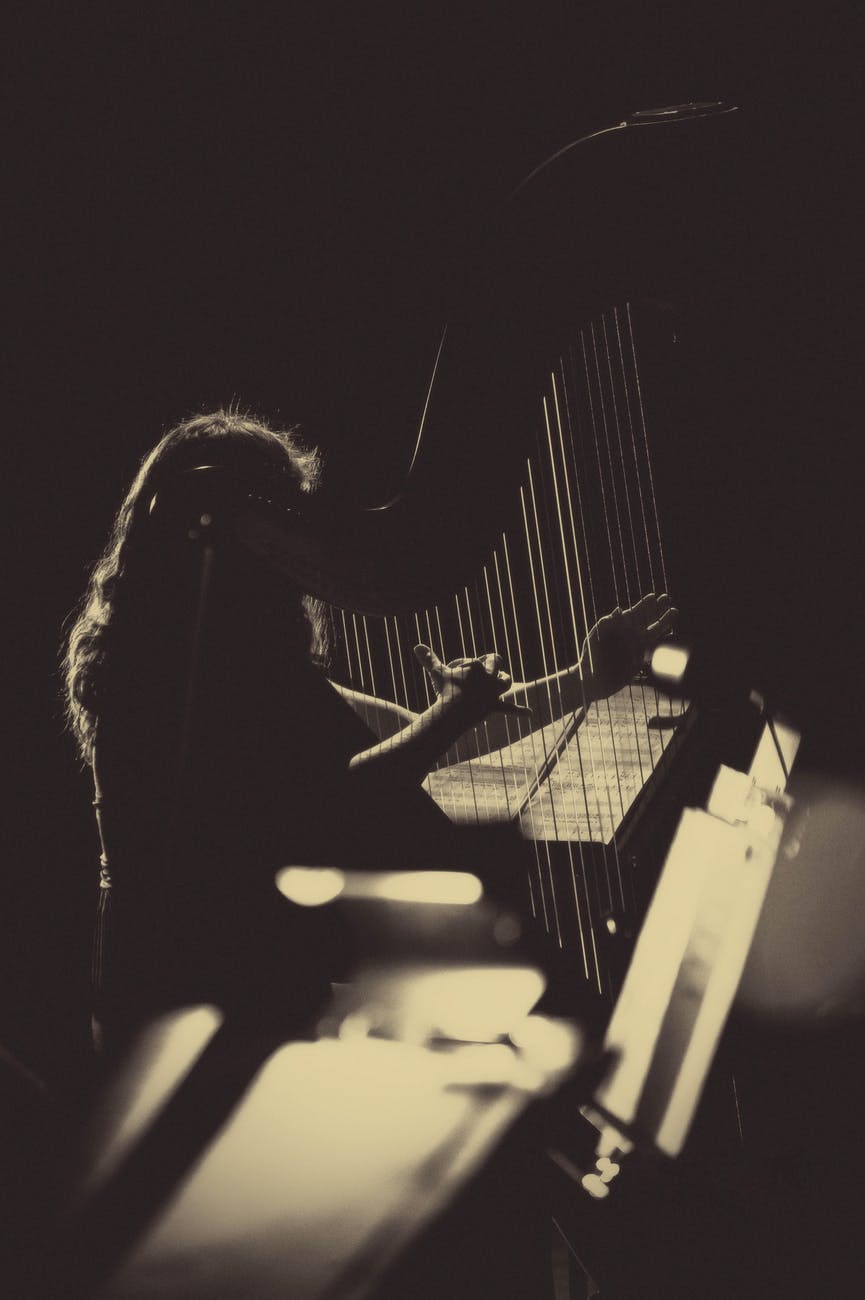
The remedy for inconsistent preferences, the solution to our rational failures provided by behaviorists, from Thaler to Kahneman, from Hanson to Taleb, is often embodied in the image of Odysseus tied to a mast. Yet this is not the only way the enchanting calls of the sirens were overcome in Grecian lore. Jason, an earlier voyager, one from a more heroic age, likewise made a similar brush with the sirens and managed to feel unscathed by their deviant sonorous clutches. Instead of the chastising constraints however, he was afforded a dueling hymn. Provided to him was the equally heroic Orpheus. Who was able to out beguile his crew with the dueling delivery of his own enchanting lyre (Fry 2018).
The solution to our irrationality is not only to create additional randomized controlled trials and annihilate our storytelling entirely. Such an enterprise has little chance of success nor would it likely be good for humanity if it did. We need instead a return of our narrative ambitions. Like it or not, we are destined to sail past the isle of sirens. Again and again. Our humanity gives us a choice in this fate, however. Even if it is fiction, it is a useful one. We can pass as Odysseus, binding ourselves to a mast. We can pass as Jason, responding to it with our lyrical master. Or finally we can say fuck all and succumb to the sonorous enchantment and pray at least, for a melodious demise.
Bibliography
Bowles, Samuel. 2016. The Moral Economy: Why Good Incentives Are No Substitute for Good Citizens. The Castle Lectures in Ethics, Politics, and Economics. New Haven ; London: Yale University Press.
Buss, David M, ed. 2015. The Handbook of Evolutionary Psychology. Hoboken, NJ, USA: John Wiley & Sons, Inc. https://doi.org/10.1002/9781119125563.
Haselton, Martie G., Daniel Nettle, and Damian R. Murray. 2015. “The Evolution of Cognitive Bias.” In The Handbook of Evolutionary Psychology, edited by David M Buss, 1–20. Hoboken, NJ, USA: John Wiley & Sons, Inc. https://doi.org/10.1002/9781119125563.evpsych241.
Henrich, Joseph Patrick. 2020. The WEIRDest People in the World: How the West Became Psychologically Peculiar and Particularly Prosperous. New York: Farrar, Straus and Giroux.
Frank, Robert H. “The Demand for Unobservable and Other Nonpositional Goods.” The American Economic Review 75, no. 1 (1985): 101-16. Accessed November 24, 2020. http://www.jstor.org/stable/1812706.
Friston, Karl. 2010. “The Free-Energy Principle: A Unified Brain Theory?” Nature Reviews Neuroscience 11 (2): 127–38. https://doi.org/10.1038/nrn2787.
Fry, Stephen. 2018. Heroes. London: Michael Joseph.
Doepke, Matthias, Michèle Tertilt, and Alessandra Voena. 2011. “The Economics and Politics of Women’s Rights.” w17672. Cambridge, MA: National Bureau of Economic Research. http://www.nber.org/papers/w17672.pdf.
Homer, and Emily R Wilson. 2018. The Odyssey.
Pager, Devah. 2016. “Are Firms That Discriminate More Likely to Go Out of Business?” Sociological Science 3: 849–59. https://doi.org/10.15195/v3.a36.
Quillian, Lincoln, Devah Pager, Ole Hexel, and Arnfinn H. Midtbøen. 2017. “Meta-Analysis of Field Experiments Shows No Change in Racial Discrimination in Hiring over Time.” Proceedings of the National Academy of Sciences 114 (41): 10870–5. https://doi.org/10.1073/pnas.1706255114.
Russell, Stuart. 2020. Human Compatible. LONDON: PENGUIN BOOKS.
Taleb, Nassim Nicholas. 2010. The Black Swan: The Impact of the Highly Improbable. 2. ed., Random House Trade paperback ed. New York, NY: Random House Trade Paperbacks.
 ExhibitingBias